
Everyday English
English at the grocery store: the essential phrases to shop without freezing
July 9, 2026 · Equipe Luna Language Academy · 3 min read
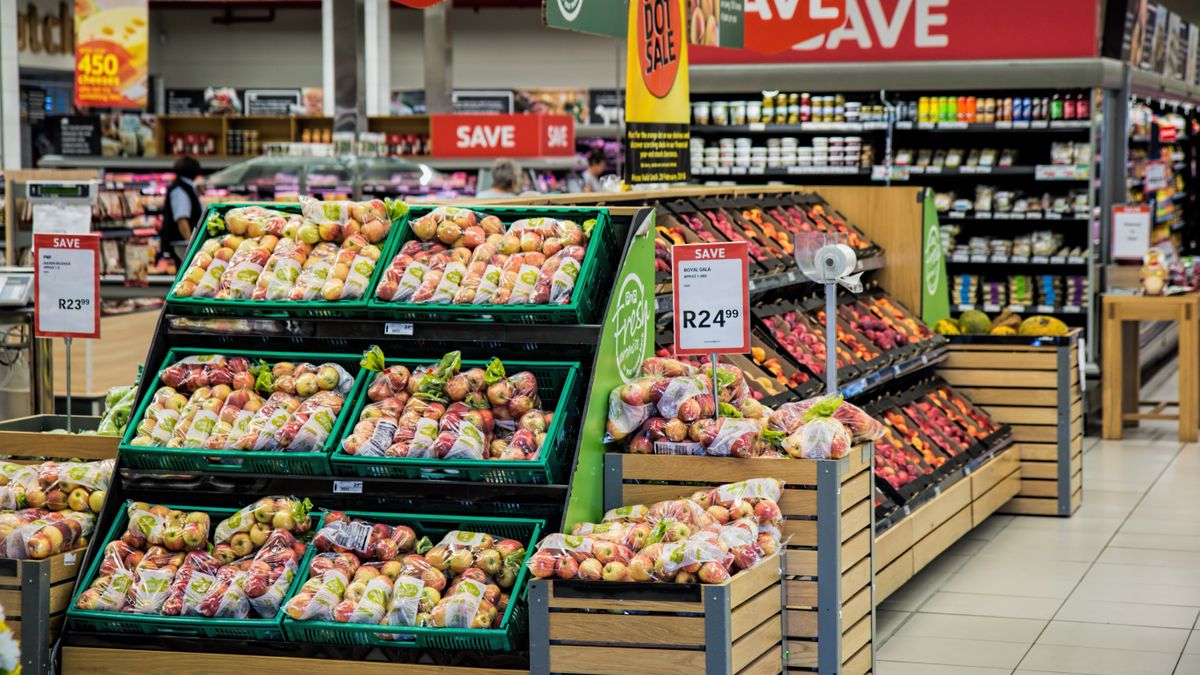
If there's a perfect place to start loosening up your English, it's the grocery store. The situations repeat every week, they're almost always the same questions, and nobody there is judging you — the cashier just wants to ring you up and move the line along. It's low pressure and high repetition, exactly the combination that makes a language stick.
This guide gathers the phrases you actually use on a trip to the store, grouped by moment. The idea isn't to memorize everything at once. It's to pick about five, use them on your next trip, and leave the rest for later.
Finding the products
Lost trying to figure out which aisle the flour is in? Instead of wandering around, just ask:
- "Excuse me, where can I find the rice?" — the go-to for locating anything.
- "Which aisle is the milk in?" — when you want the exact aisle.
- "Do you have any black beans?" — to check if they carry something.
- "I'm looking for flour." — a simple way to signal what you need.
- "Is this the only brand you have?" — when you're after another option.
The answer usually comes with an aisle number ("aisle seven") or an "over there" and a nod. If you don't catch it, a calm "Sorry, could you show me?" does the trick.
At the counter (deli, bakery, butcher)
The counter feels intimidating because it involves quantity and choice. But it's only a few phrases:
- "Can I get half a pound of turkey?" — weight is usually in pounds ("lb") in the US.
- "A little more, please." / "That's perfect." — to adjust the amount.
- "Sliced thin, please." — for how you want it cut.
- "Can I get two of those?" — pointing works too.
If the worker asks "Anything else?", you close with "That's all, thank you."
At the checkout
The home stretch — the part that makes most people nervous — but it's a script:
- They'll greet you with "Hi, how are you?" — just answer: "Good, thanks. And you?"
- "Did you find everything okay?" → "Yes, thank you!" or "Almost — couldn't find the cilantro."
- "Do you need a bag?" / "Paper or plastic?" → "Yes, please." / "Plastic is fine."
- To pay: "I'll pay by card." / "Cash, please." / "Do you take Apple Pay?"
- If they ask for your ZIP or phone number: "Can I skip that?" usually works.
- To finish: "Have a good one!" is the most natural way to say goodbye.
When something goes wrong
This is where most people freeze and give up — but sorting out a small problem is completely normal, and nobody bats an eye:
- "I think this rang up wrong." — when the price came up incorrectly.
- "This was supposed to be on sale." — when an item should be discounted.
- "Can I return this? I have the receipt." — to give something back.
- "My card was declined — can I try again?" — when payment fails.
- "Sorry, I changed my mind about this one." — to drop an item.
Notice none of these needs difficult grammar. They're ready-made phrases for moments that keep repeating.
Turning this into actual speaking
Reading the list changes nothing on its own — using it changes everything. So before your next trip, pick five phrases from this page, the ones that best match your routine, and decide to use each at least once. That's it. The following week, five more.
The grocery store is your lab: make quiet mistakes, repeat, and slowly build the confidence to carry this into harder situations. It's the same principle behind the 1% a day we break down in the complete guide — small steps, in the same place, until they turn automatic.
Next time you walk into a store, don't just walk in to shop. Walk in to practice. You'll take the groceries home either way; the English, only if you use it.
Ready to really learn — with people who get your life abroad?
Luna is an English school built for Brazilians living abroad. Explore the plans and take the first step.
See the plansKeep reading

How to Learn English While Living Abroad: The Complete Guide for Brazilians
The definitive guide for the Brazilian who already lives abroad and wants to finally unlock everyday English — practical steps, no magic formula.

How to overcome the fear of speaking English: 7 strategies that actually work
What holds you back is almost never vocabulary — it's the fear of speaking. 7 practical strategies to loosen your tongue and build confidence, even when you're mortified.